
How to Prepare Your Backyard for Basketball Court Installation
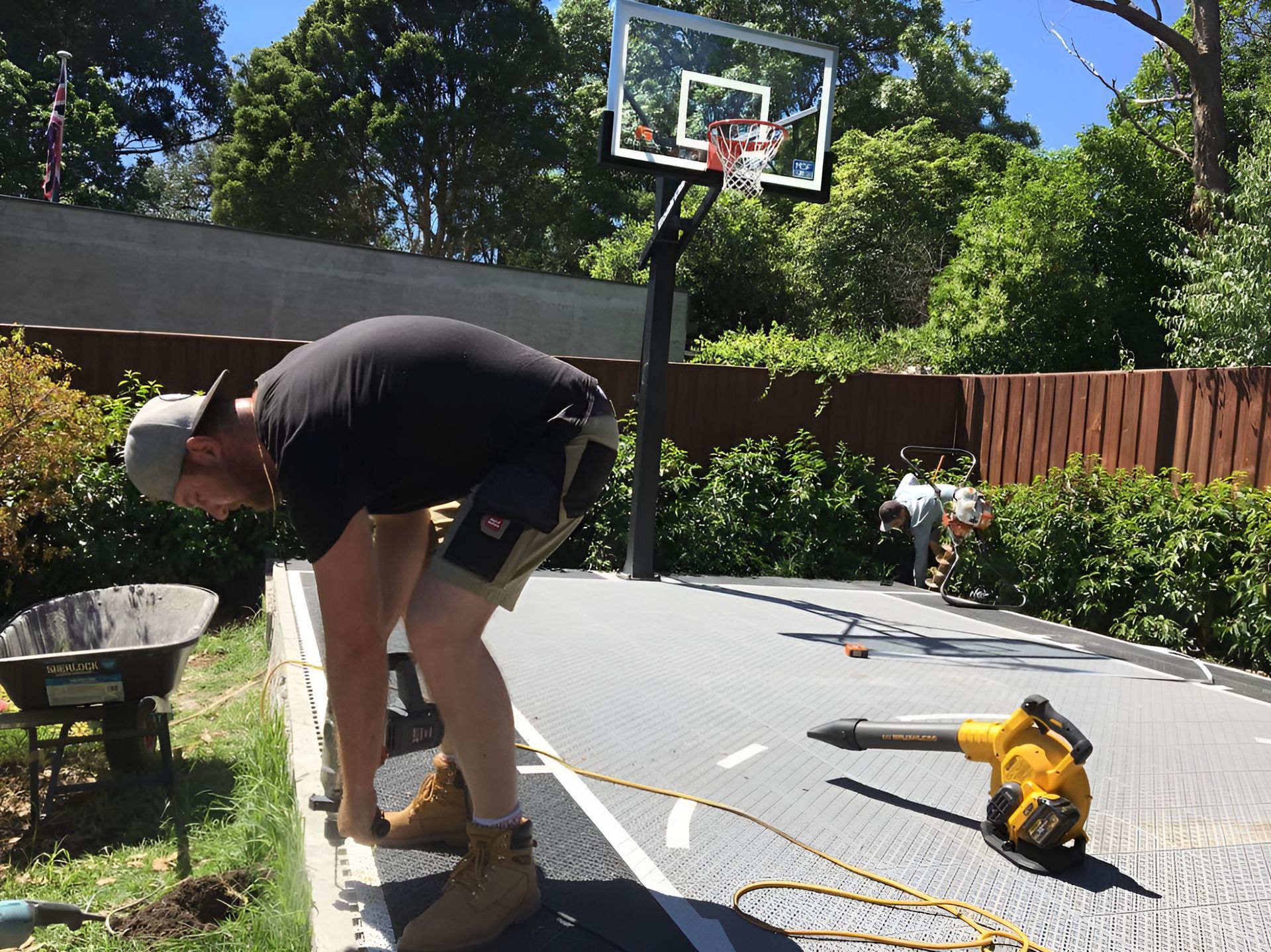
A backyard court installation can transform your outdoor space into a hub for fun, exercise, and friendly competition. However, before you can start shooting hoops, there are several crucial steps to ensure a smooth basketball court preparation process. From assessing your backyard and clearing the site to choosing the right foundation and ensuring proper drainage, every step plays a vital role in creating a durable and high-quality playing surface.
Whether you’re planning a half-court for casual games or a full-size court for serious practice, proper site preparation for court installation is key. In this guide, we’ll walk you through each phase of the preparation process to help you create a safe and professional basketball court in your backyard.
Assessing Your Backyard for Basketball Court Installation
Before breaking ground, we need to evaluate the available space and determine whether it’s suitable for a backyard court installation. Not all outdoor spaces are immediately ready for construction, so a thorough assessment helps avoid costly mistakes.
Measuring Your Space
The first step in basketball court preparation is measuring the space to determine what size court will fit. A standard full-size basketball court is 94 feet by 50 feet, but smaller options include:
- Half-court: 30 feet by 30 feet (minimum)
- Key-only court: 15 feet by 20 feet for basic shooting practice
- Three-point court: At least 40 feet wide to accommodate three-point shooting
Consider the layout of your yard and whether you’ll need to remove landscaping elements or structures to create the necessary space.
Checking for Potential Obstacles
Before moving forward with site preparation for court installation, identify any obstacles that could interfere with construction, such as:
- Large rocks or tree roots that may require excavation
- Utility lines (gas, water, or electric) running underground
- Sloped terrain that needs leveling
- Drainage issues that could cause water pooling on the court
If your backyard has an uneven surface or poor drainage, additional grading and excavation will be required.
Land Clearing and Excavation for Basketball Court Preparation
Once we’ve assessed the site, the next step in basketball court preparation is clearing the land and leveling the ground.
Clearing the Site
Clearing the site involves removing any grass, trees, bushes, or structures that are in the way. A clean and open area provides the best foundation for backyard court installation.
- Remove sod and topsoil to prevent future weed growth
- Cut down trees and grind stumps if necessary
- Relocate any irrigation systems or underground utilities
Hiring professionals, like Forrest Excavation, ensures the site is properly cleared with minimal disruption to surrounding areas.
Excavation and Leveling the Ground
A level surface is critical for a durable and safe basketball court. Uneven ground can lead to cracks, shifting surfaces, and water drainage problems.
- Laser grading technology helps achieve a perfectly level court
- Soil compaction prevents shifting and settling over time
- Adding a gravel base can provide additional stability
Proper excavation is essential for long-term durability and optimal gameplay.
Installing a Reliable Drainage System
Poor drainage can damage a basketball court, leading to cracks, warping, and uneven surfaces. Integrating drainage solutions during site preparation for court installation will prevent future issues.
Common Drainage Solutions
- Slope Grading: Courts should have a slight slope (about 1%) to allow water runoff.
- French Drains: Installing a trench filled with gravel and a perforated pipe helps redirect excess water.
- Permeable Materials: Using porous materials allows water to drain naturally.
Proper drainage ensures your backyard court installation remains dry, stable, and safe for play.
Choosing the Right Base for Your Basketball Court
The base of your basketball court is its foundation. Choosing the right material for basketball court preparation will determine the court’s durability and performance.
Concrete Base
- Most durable option for permanent courts
- Low maintenance and long-lasting
- Requires professional installation and curing time
Asphalt Base
- More affordable than concrete but requires maintenance
- Provides good bounce and traction
- Can crack over time if not properly maintained
Compacted Gravel Base
- Budget-friendly option for temporary courts
- Good drainage properties but lacks durability
- Best for low-traffic areas
Selecting the right base material depends on climate, budget, and long-term plans for the court.
Selecting the Right Surface for Your Basketball Court
The playing surface affects ball bounce, traction, and player safety. Here are the best options for backyard court installation:
Acrylic Coatings
- Weather-resistant and durable
- Provides a professional look similar to indoor courts
- Requires a concrete or asphalt base
Modular Sport Tiles
- Interlocking tiles that provide good shock absorption
- Quick and easy installation
- Low maintenance and customizable
Rubberized Surfaces
- Soft and impact-absorbing to reduce injuries
- Great for multi-sport use
- Can be used over concrete or asphalt
Choosing the right surface depends on your budget, climate, and how often the court will be used.
Marking the Court and Installing Essential Features
Once the foundation and surface are ready, it’s time to mark the court and add finishing touches.
Painting Court Lines
Accurate lines ensure proper gameplay. Use high-quality, non-slip paint for:
- Boundary lines
- Free-throw lanes
- Three-point arc and key area
Basketball Hoop Installation
Choose from:
- In-ground hoops for a professional setup
- Portable hoops for flexibility and adjustability
Adding Extra Features
- LED lighting for nighttime play
- Fencing to keep the ball within the play area
- Benches and seating areas for players and spectators
These additions enhance the overall basketball court preparation process and improve playability.
Safety Measures and Maintenance Tips
Safety should be a priority during and after backyard court installation.
Inspection Checklist
- Check for surface cracks or loose tiles
- Ensure proper drainage functionality
- Secure all hoops and accessories
Regular Maintenance
- Sweep debris regularly to prevent damage
- Reseal the surface every few years for durability
- Check drainage systems to avoid water buildup
Proper maintenance keeps your
site preparation for court investment in top condition for years.
Transform Your Backyard with a Professional Basketball Court Installation
A high-quality backyard court installation provides endless entertainment and fitness opportunities. By focusing on proper basketball court preparation and site preparation for court construction, we ensure a smooth and durable setup. Whether it’s a simple half-court or a professional full-size layout, careful planning, drainage, and quality materials are essential for a long-lasting playing area.
For expert excavation and site preparation, trust Forrest Excavation. Contact us at
207-441-4284 or email
forrestexcavationinme@gmail.com to start your basketball court project today.